
Crypto wallet backup is non-negotiable. Hot wallets are convenient but vulnerable; cold storage is safer. Your seed phrase is everything—lose it, and your crypto vanishes forever. Metal backups beat paper every time—they don’t burn or dissolve. Store multiple copies in different locations, and never, ever keep them digitally. About 30% of crypto holders lose access permanently. Hardware wallets with PIN protection are worth every penny. The difference between keeping and losing your digital fortune? Proper backup.
Understanding Crypto Wallet Types and Their Security Features
Every crypto investor faces a crucial choice: security or convenience?
Let’s be real—you can’t have both perfectly.
Hot wallets connect to the internet, giving you quick access but exposing your assets to hackers.
Cold wallets? Offline and safer, but less convenient. Hardware features like PIN protection and offline key generation make cold storage particularly secure. No internet connection, no problem. The Winklevoss twins protect their assets by storing private key snippets in vaults.
Software wallets run on your devices—desktop, mobile, browser extensions. They’re convenient but vulnerable.
Then there’s the control factor. Custodial wallets let exchanges hold your keys. Easy, but not yours.
Non-custodial wallets give you full user control. Your keys, your crypto, your responsibility.
The wallet security spectrum is simple: convenience decreases as security increases.
Many wallets now offer enhanced protection through biometric logins and two-factor authentication to prevent unauthorized access.
Regular security audits help ensure your wallet’s protection systems remain effective and up-to-date.
Choose wisely.
Seed Phrase Backup Methods: Physical vs. Digital Options

Now that you understand your wallet options, let’s talk about the elephant in the room: your seed phrase.
You’ve got two main backup routes: physical or digital. Spoiler alert: digital is terrible.
Paper backups are common. Easy. Cheap. But they’re basically toast if they get wet, burned, or just sit around long enough.
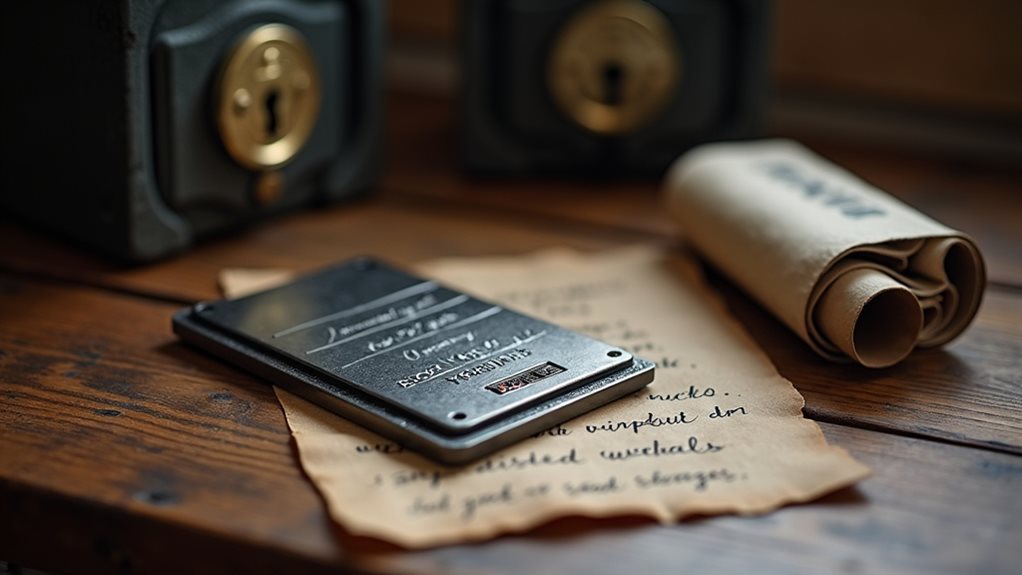
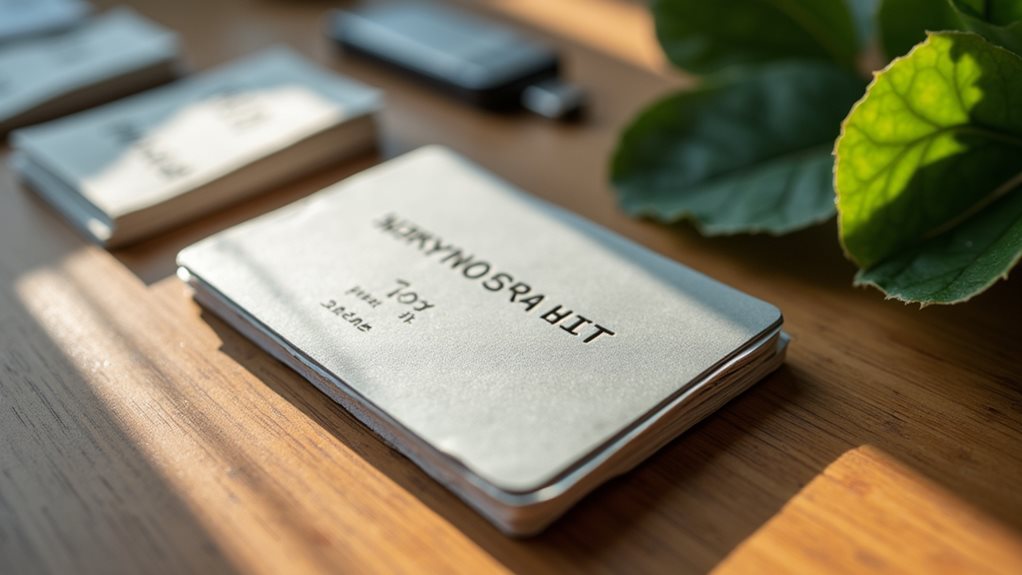
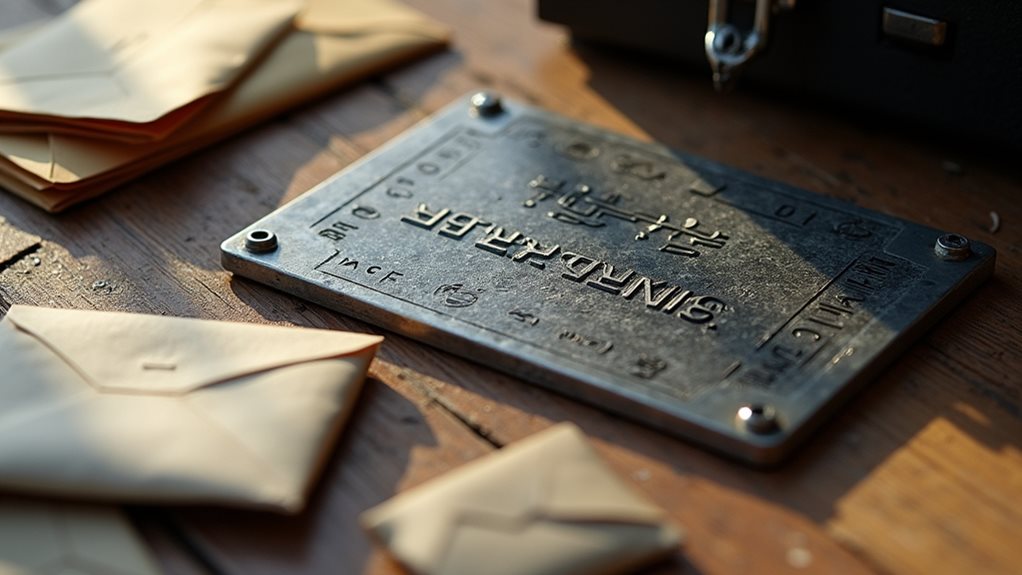
Metal backups, though? Now we’re talking disaster resistance. These bad boys withstand fire up to 1400°C, water, and pretty much anything short of a nuclear blast. Experts like Jameson Lopp have extensively tested various metal backup products for their durability against extreme conditions.
Metal backup solutions laugh in the face of disaster while your paper phrases turn to ash and digital backups get hacked.
Digital storage is a hard no. Your phone notes, cloud services, password managers—they’re all inviting hackers to your crypto party.
And those fancy multi-signature setups where you destroy your seed phrase? Recipe for disaster.
For real backup durability, use metal. Store multiple copies. Keep them separate. Hardware wallets like Cypherock X1 offer enhanced security by implementing Shamir’s Secret Sharing to split your seed phrase into multiple components. Don’t be stupid.
Hardware Wallets: The Gold Standard for Crypto Security

Three simple words should guide your crypto security approach: cold, hard, separation.
Hardware wallets deliver all three. They’re not connected to the internet, built with tamper-resistant hardware, and completely separate from your vulnerable devices. No contest against software alternatives. These devices require PIN protection to access your wallet, with Trezor models supporting PINs up to 50 digits for maximum security. Most hardware wallets also support multiple blockchains simultaneously, allowing you to manage diverse crypto assets with a single device.
Hardware wallet advantages are clear:
- Your private keys never leave the device—ever. Hackers can’t steal what they can’t reach.
- Even if your computer is infected with more viruses than a neglected petri dish, your crypto remains safe.
- Transactions require physical confirmation. No button press, no transaction.
- Secure key storage happens in specialized chips similar to those in passports and credit cards.
Lost your device? No problem. That recovery phrase you carefully stored will resurrect everything on a new wallet.
Creating a Multi-Layered Backup Strategy for Long-Term Safety
Hardware wallets offer exceptional security, but they’re not foolproof. Devices get lost. Companies go bankrupt. Stuff happens.
That’s why multi-layered backup strategies matter. You need decentralized solutions that eliminate single points of failure. Period. Essential for recovery if your wallet is lost, stolen, or damaged.
Multi-layered security isn’t optional—it’s essential. Decentralize everything to crush vulnerability at its core.
Think defense-in-depth: offline backups that only emerge during emergencies, and multi share backups that split your seed phrase into separate pieces. Pretty clever, right?
The best setups require a threshold number of shares (like 2 of 3) to recover your wallet. Metal backups beat paper every time—they don’t burn or fade.
Never display your seed digitally except on trusted hardware.
For serious protection, diversify across multiple wallets. Vault12 Guard simplifies management of diverse digital portfolios while ensuring you never lose access to your assets. Different purposes, different risks.
Keep backup copies in geographically distinct locations. Natural disasters don’t care about your crypto portfolio.
Common Pitfalls and Recovery Solutions When Losing Access
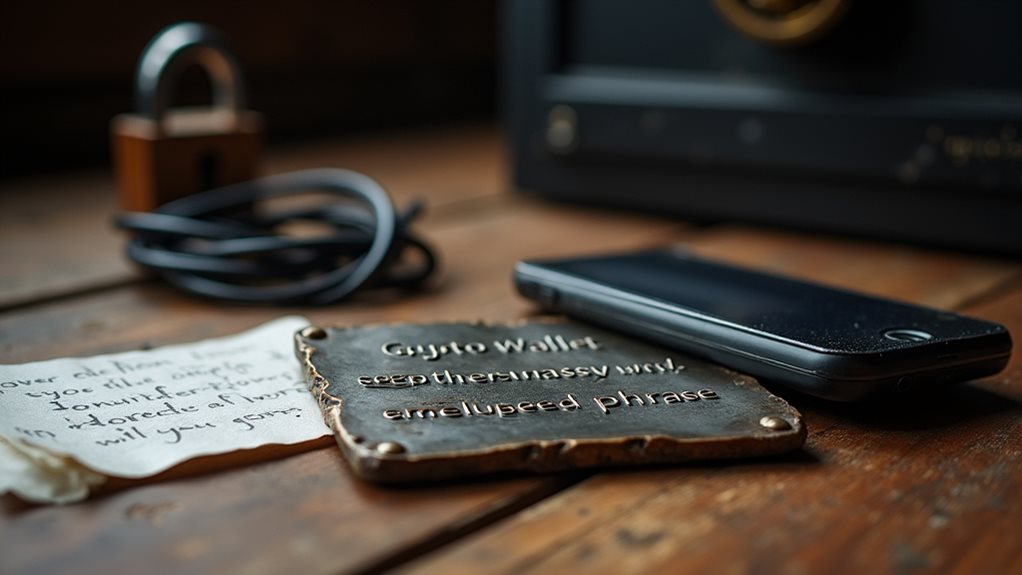
Despite the crypto industry’s promises of financial freedom, losing access to your wallet remains shockingly common—20-30% of users have permanently lost their funds due to misplaced seed phrases.
Turns out financial autonomy comes with responsibility. Who knew?
Here’s what typically goes wrong:
- Paper backups get damaged or lost (classic rookie mistake)
- Single backup copies instead of multiple, geographically distributed ones
- Damaged hardware with no recovery pathway in place
- Forgotten PINs or passwords with no backup access method
Professional recovery services exist but charge hefty fees with no guarantees. Success rates? Dismally low. Recovery attempts may include a non-negotiable fee of $500 just to start the process, regardless of success.
User education remains the best defense—understanding proper backup procedures before disaster strikes. Users employing metal plate backups or multiple seed phrase copies consistently report higher recovery success rates when problems occur.
Metal plate backups beat paper any day. They’re fire-resistant, waterproof, and harder to accidentally throw away.
Frequently Asked Questions
Can I Recover My Wallet if My Hardware Device Manufacturer Goes Bankrupt?
Yes, you can recover your wallet even if the manufacturer goes bankrupt. As long as you’ve saved your recovery seed phrase, you’ll maintain access to your funds without needing any manufacturer support.
How Often Should I Test My Backup Recovery Process?
Test your backup recovery process every 6-12 months. Increase this frequency if you make many transactions, after firmware updates, or if your storage media faces environmental risks. Don’t overtest to avoid unnecessary seed exposure.
Are Social Recovery Options Safer Than Traditional Seed Phrase Methods?
Social recovery can be safer than traditional security methods as it distributes risk across multiple trusted parties. You’ll eliminate single-point failure but must carefully select reliable guardians who won’t collude against you.
Can Quantum Computing Break My Wallet’s Cryptographic Security?
Yes, powerful quantum computers could eventually break your wallet’s encryption. You’ll need to migrate to quantum-resistant solutions when they become available to maintain cryptographic resilience against emerging quantum threats.
How Do Inheritance Plans Work for Crypto Wallet Access?
You’ll need to document your wallet access credentials, store seed phrases securely offline, and establish legal authorization through trusts rather than wills. Effective inheritance planning requires physical backup records and clear instructions for your beneficiaries.