
Crypto investing isn’t for the faint-hearted. Start by understanding blockchain basics and researching projects through white papers, not Twitter hype. Limit your crypto allocation to under 8% of your portfolio and use dollar-cost averaging to avoid emotional decisions. Enable two-factor authentication everywhere and consider cold wallets for serious investments. Diversify across different crypto sectors—don’t put everything in meme coins, seriously. Technical analysis beats gut feelings every time. The rabbit hole goes much deeper.
Building a Strong Foundation for Crypto Success
While diving into the crypto world might seem like jumping into shark-infested waters, understanding the basics first will save you from getting bitten.
Start by wrapping your head around blockchain fundamentals—it’s just a fancy term for a decentralized public ledger maintained by computer nodes. No central authority. No middlemen. Two-factor authentication adds an essential layer of security to protect your crypto investments.
Blockchain is just the internet’s trust machine—ledgers on steroids, with no suits calling the shots.
With over 9,700 cryptocurrencies floating around, you’ll need to know the difference between Bitcoin (digital gold) and the thousands of sketchy altcoins that might disappear tomorrow. Seriously.
Pay attention to crypto basics like token supply, transaction fees, and inflation rates. These aren’t boring details—they’re what separate legitimate projects from glorified Ponzi schemes.
And please, for the love of your bank account, recognize that meme coins aren’t “investments.” They’re lottery tickets. For enhanced security, consider using cold wallets to store your digital assets long-term rather than leaving them on exchanges. The approval of spot Bitcoin ETFs in early 2024 has created safer investment options for those who prefer regulated exposure.
Researching Before You Invest: The Key to Smart Choices

Now that you’ve got your crypto basics down, let’s talk about research—your secret weapon against making terrible decisions with your money.
Seriously, don’t skip this part.
Start with white paper evaluation. It tells you what the crypto actually does. Revolutionary technology or empty promises? You’ll know.
Tokenomics analysis reveals supply limits and distribution—crucial for predicting whether your investment might soar or crash spectacularly. With Bitcoin at $100,000 in late 2024, understanding tokenomics became more critical than ever.
Don’t ignore market trends. They’re telling you something. Technical indicators exist for a reason—use them.
Consider the cryptocurrency type. Bitcoin isn’t Dogecoin. One’s digital gold, the other started as a joke. There’s a difference.
Your strategy matters too. HODLing works for some. DCA for others. Pick one that matches your risk tolerance.
Explore cryptocurrency exchanges like Coinbase or Binance that act as centralized exchanges where you can safely begin your investment journey.
Defining clear investment goals before entering the market will help you maintain focus during periods of high volatility and prevent emotional decision-making.
The crypto market doesn’t forgive the uninformed. Research or regret.
Creating Your Personal Investment Strategy and Risk Boundaries

Building a personal crypto investment strategy isn’t optional—it’s your financial lifeline in the crypto ocean.
Start by defining clear investment objectives: growth? Hedging? Store of value? Then honestly assess your risk tolerance. Not everyone’s built for crypto’s wild rides.
Defining your investment ‘why’ comes first. Some thrive in volatility—others crumble. Know yourself before knowing crypto.
Set boundaries, people. Seriously. Limit your crypto allocation to 4-7.5% of your portfolio. No exceptions.
Dollar-cost averaging works for most beginners. Buy fixed amounts on schedule. No emotional decisions. No panic selling. No FOMO buying. This smooths out volatility while removing the stress of timing market fluctuations perfectly.
Never invest more than you can afford to lose, especially when dealing with high-volatility assets like cryptocurrency.
With trading volume down 54% since December, now’s a critical time to be extra cautious with entry points.
Review quarterly. Adjust as needed. Set stop-losses and stick to them.
Remember that emergency fund? Keep it separate from your crypto money. The market doesn’t care about your rent due date.
Crypto’s exciting, but it shouldn’t keep you up at night.
Securing Your Digital Assets Against Threats
Once you’ve purchased crypto, it becomes a glowing target for hackers, scammers, and sometimes your own carelessness. Protecting your digital wealth isn’t optional—it’s survival. Strong authentication is your first defense; enable 2FA immediately.
Network security matters too. Never, ever manage wallets on public Wi-Fi without a VPN. Consider implementing robust security measures such as firewalls and encryption for additional protection. Regularly regenerate your API keys to minimize the risk of unauthorized access to your accounts. Recent reports show that skilled con artists stole $46 million from Coinbase users through sophisticated schemes.
- Cold storage is non-negotiable—get a hardware wallet like Ledger or Trezor for anything beyond pocket change.
- Implement proper access control by using unique passwords and role-based permissions.
- Stay vigilant against phishing attacks—that “urgent” email from your exchange? Probably fake.
- Create multiple backups of recovery phrases, then test your recovery strategies regularly.
The crypto world doesn’t forgive mistakes. Your security is entirely on you.
Balancing Your Portfolio for Optimal Growth and Protection
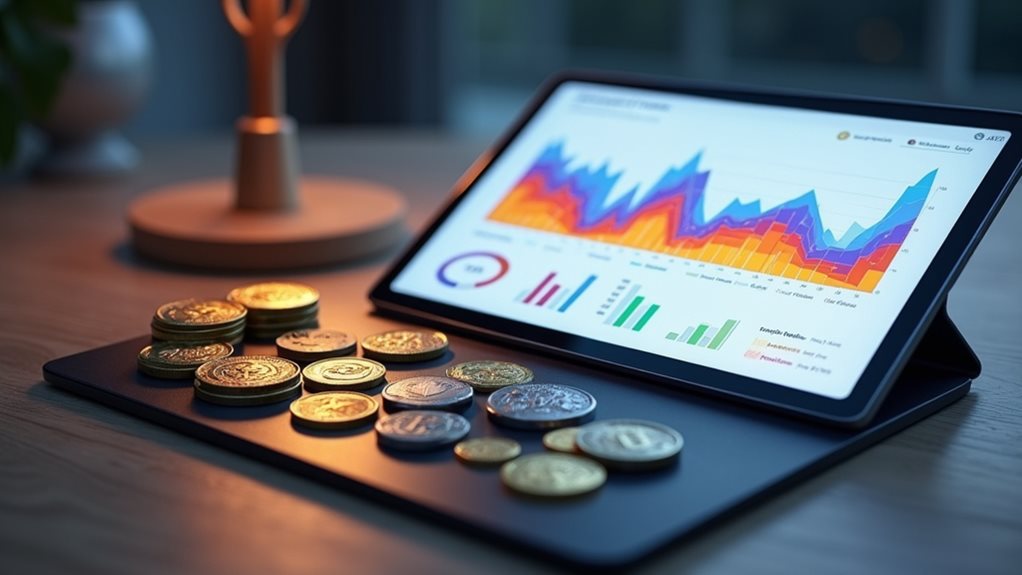
The smarter your portfolio strategy, the less you’ll feel crypto’s notorious stomach-churning volatility. No kidding.
A thoughtful crypto strategy transforms wild price swings from terrifying rollercoaster to manageable market rhythm.
Your risk tolerance matters. Young investor with decades ahead? More aggressive asset allocation might work. Retiree? Not so much.
Market volatility becomes your frenemy when you’ve diversified properly—spread investments across large-cap cryptos (Bitcoin, Ethereum) and smaller projects with growth potential. Consider storing your high-value investments in cold storage wallets for enhanced security.
Sector diversification isn’t optional. Gaming tokens, DeFi projects, storage coins—mix it up! Consider adding exposure to tokenized assets for additional portfolio stability and traditional market correlation. Including stablecoins like USDT can help preserve capital during market downturns.
Your investment horizon dictates everything. Short-term? Stablecoins provide sanctuary. Long-term? Stake those assets for passive income.
Dollar-cost averaging beats emotional buying. Period.
Don’t forget profit-taking strategies. Nobody went broke securing gains.
Rebalance regularly—your initially perfect percentages won’t stay that way when some coins moon and others crash.
Developing Ongoing Knowledge and Analytical Skills

While Bitcoin prices swing wildly, truly successful crypto investors aren’t just riding emotional waves—they’re studying the charts. Developing analytical skills isn’t optional in crypto—it’s survival. Your expedition into trend analysis and market sentiment interpretation starts now, not tomorrow. Past performance does not guarantee future results, so approach historical data with healthy skepticism. Candlestick charts reveal critical information about market behavior by showing highest and lowest price points during trading periods. Modern AI trading signals achieve up to 92% accuracy in market predictions.
- Learn technical analysis basics—moving averages, RSI, and MACD aren’t just fancy abbreviations but tools that reveal market psychology.
- Practice with paper trading before risking actual money—your ego can handle fake losses better than real ones.
- Follow respected analysts on social platforms—just don’t worship them.
- Dedicate time to study blockchain explorers and on-chain metrics—this data doesn’t lie, unlike that influencer promising 100x returns.
Remember: The market doesn’t care about your feelings. Chart patterns do.
Frequently Asked Questions
How Do Taxes Work for Cryptocurrency Gains and Losses?
You’ll pay capital gains taxes when selling or trading crypto. The tax implications vary—short-term gains (held <1 year) face higher rates than long-term gains (held >1 year). Losses can offset your gains.
When Is the Best Time of Day to Execute Crypto Trades?
Trade during U.S.-European market overlap (1-5pm UTC) for ideal market volatility and tighter spreads. You’ll find better liquidity Tuesday-Thursday, while early mornings often present buying opportunities for your trading strategies.
Can I Invest in Crypto Through My Retirement Account?
Yes, you can invest in crypto through self-directed IRAs or specific crypto IRAs. Some 401(k) plans will soon offer options following recent regulatory changes. Consider diversification limits when developing your retirement account crypto investment strategies.
How Do Hard Forks Affect My Existing Cryptocurrency Holdings?
Hard forks duplicate your holdings, giving you new coins that have tax implications. You’ll need to track both assets separately in your portfolio. Impact analysis shows potential volatility and security considerations post-fork.
What Happens to My Crypto if the Exchange Goes Bankrupt?
Your crypto may be at risk if the exchange goes bankrupt. You’re likely an unsecured creditor, and asset recovery depends on whether the exchange properly segregated funds. Prioritize exchange security through self-custody alternatives.