Bolivia’s leap into the crypto world is like a stuffy accountant embracing punk rock. Bye-bye, decade-long crypto ban, and hello stablecoins! The Central Bank and President Rodrigo Paz flipped the script, partnering with banks to integrate stablecoins into the economy. Why? To combat nasty inflation and dollar shortages. With banks like Banco Bisa offering USDT services, stablecoins become the weapon of choice. Even big names like Toyota are onboard. Feeling curious? There’s more scoop to explore!
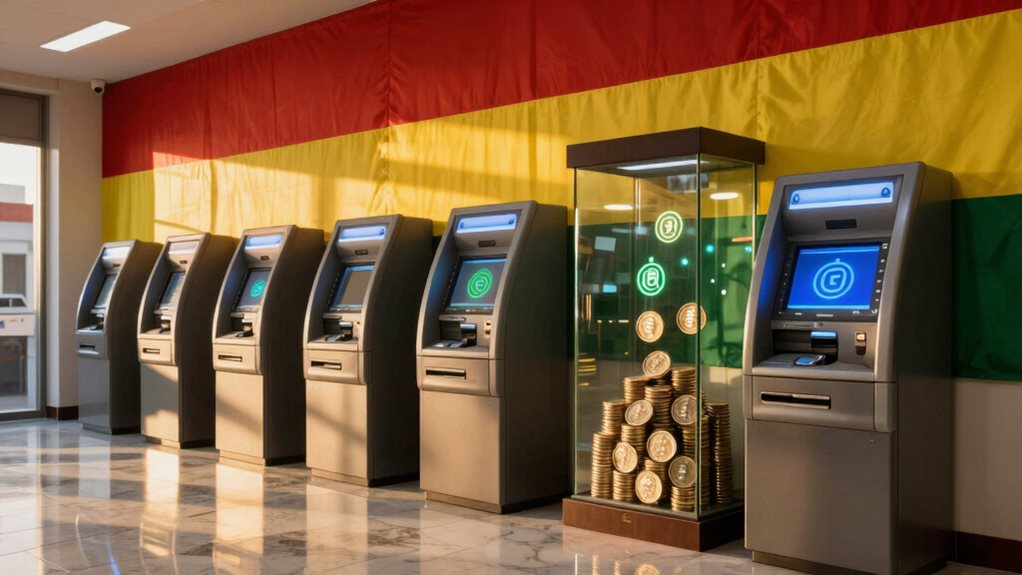
Although Bolivia once clamped down on cryptocurrencies with a decade-long ban, things are shaking up in a big way. In June 2024, the country lifted its crypto restrictions and decided to join the 21st century. The Central Bank of Bolivia now allows regulated stablecoin use through authorized institutions. But there’s a catch—transactions must go through licensed banks. Don’t follow the rules, and there are penalties. This reversal wasn’t random. It was a coordinated effort between the central bank, financial authorities, and industry stakeholders. Teamwork makes the dream work, right?
The numbers are staggering. From July 2024 to June 2025, Bolivia processed a whopping $14.8 billion in stablecoin and crypto volume. Virtual asset transactions skyrocketed by 530% from $46.5 million in the first half of 2024 to $294 million in the first half of 2025. May 2025 even saw a peak at $68 million in a single month. Clearly, people are loving this new freedom. The surge in adoption, as indicated by the 530% increase, places Bolivia 46th globally in crypto adoption, highlighting the rapid embrace of digital currencies. The Central Bank of Bolivia (BCB) now permits financial institutions to transact with digital assets, which has been a game-changer for the country’s financial landscape.
Economy Minister José Gabriel Espinoza announced stablecoin integration into the formal system, as banks now offer crypto services for legal tender payments. This policy recognizes the global crypto environment and aims to give Bolivia a competitive edge. Part of a broader modernization plan under President Rodrigo Paz, this announcement came alongside a hefty $9 billion multilateral financing and tax reforms. Talk about a financial facelift.
Banks are stepping up, too. They’re authorized for cryptocurrency custody services, and stablecoins are now part of savings accounts, credit, and loans. Banco Bisa, for instance, handles USDT custody and transactions, functioning alongside the boliviano. This expansion facilitates cross-border payments and offers a hedge against currency depreciation.
With inflation over 22% year-on-year, and dollar shortages, stablecoins have become a lifeline. Residents and businesses are adopting USDT to preserve capital. Even big names like Toyota and Yamaha accept Tether now.
Lucien Bourdon, a Bitcoin analyst, calls it a quiet repeal of the ban. The government, though, frames it as financial modernization. Whatever you call it, Bolivia’s stablecoin scene is buzzing, and there’s no going back.