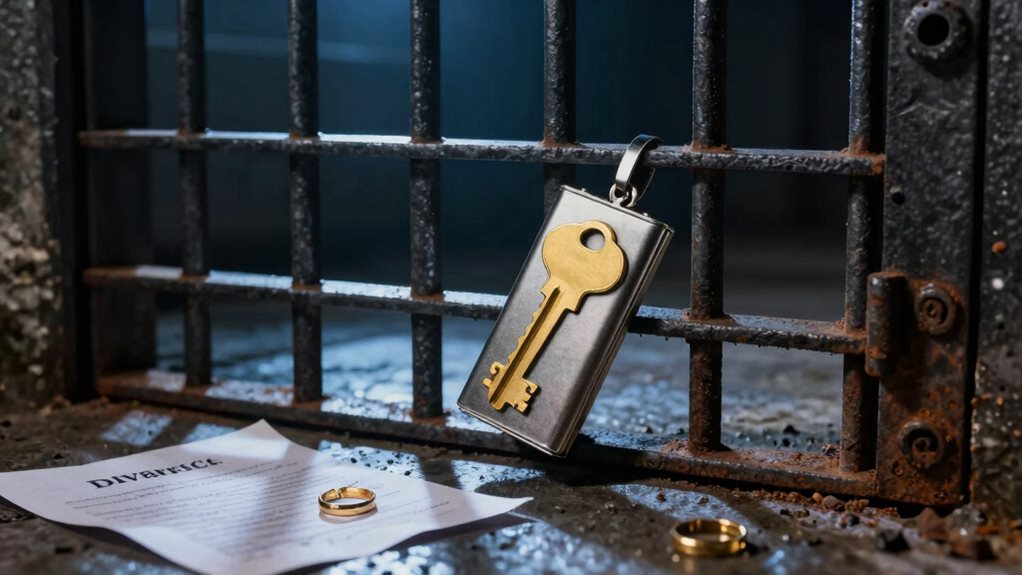
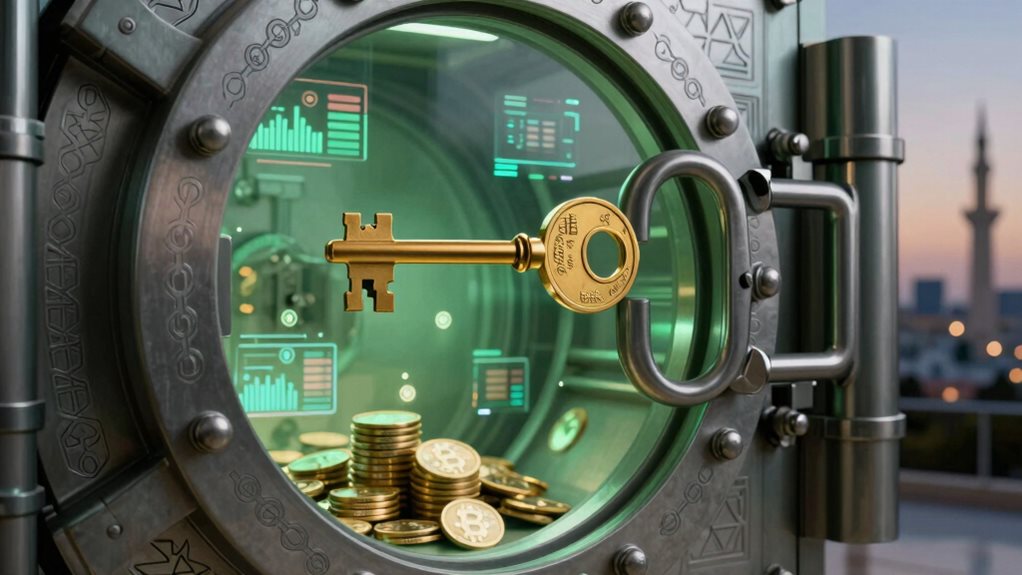
In divorce battles, Bitcoin can be the ultimate hide-and-seek champion. Assets stashed in anonymous wallets are tricky to track. Oh, the fun of finding them! Trackers are needed and not the kind you use to find your lost keys. Courtrooms require honesty, but Bitcoin’s like a deadbeat father—often missing. And when it’s finally found, sudden value drops can feel like a bad reality TV twist. Want to see what else this crypto soap opera entails?

When it comes to divorce, Bitcoin isn’t just a digital currency; it’s a digital headache. Envision this: a tech executive hides a $50 million Bitcoin stash, only for it to pop up via a stray screenshot after the divorce dust settles. That’s one sneaky move.
Bitcoin during divorce isn’t just currency; it’s a hidden treasure, surfacing unexpectedly post-divorce like a financial ghost.
With cryptocurrencies, assets can be tucked away in anonymous wallets or zipped across borders faster than you can say “crypto-craze.” And guess what? Tracking them down requires specialized forensic accounting and blockchain analysis. Yep, it’s as complex as it sounds.
Spouses might notice suspicious activity—large transfers, sudden shifts to privacy coins like Monero. But catching these maneuvers isn’t a cakewalk. Credit card statements might hint at crypto ATMs or mining gear. Courts demand full disclosure, and hiding assets can land someone in hot water with contempt charges. No fun at all.
Valuing these assets is another rollercoaster. Imagine Bitcoin jumping from $30,000 to $45,000 overnight. Boom, millions swing in divorce settlements. Screenshots from exchanges like Coinbase are vital to capture volatile values.
Ethereum and DeFi assets? Even trickier. Specialists needed here, folks. Oh, and don’t forget the capital gains tax if assets are sold during proceedings. Ouch.
The law treats Bitcoin like property, making pre-marital holdings separate, but any appreciation during the marriage gets sliced up. Courts demand transparency, and jurisdictions like California, Washington, and England enforce this rigorously. Traditional divorce law struggles with the jurisdictional complexities of cryptocurrency, as Bitcoin wallets may involve multiple countries, adding another layer of complexity. Judges face challenges in determining the acquisition timing of digital assets, further complicating the equitable division.
Yet, anonymous blockchain transactions complicate acquisition timing. It’s a mess.
Then there’s the jurisdictional maze. Cryptos are borderless. Transfers to havens like Malta or Singapore? Good luck recovering those. Enforcement is a nightmare, often needing blockchain gurus to untangle irreversible transactions.
English courts can issue orders, but executing them is another story. High-net-worth divorces frequently feature crypto, with the law playing catch-up.
In some cases, millions in crypto remain hidden for years post-divorce. San Jose divorces, thanks to the tech-savvy crowd, often encounter crypto conundrums.
Detailed wallet disclosures are mandatory. Missed assets lead to sanctions or skewed settlements. The future? Who knows, but with 55 million U.S. adults holding crypto, expect more drama.