

New Zealand is obliterating all 221 crypto ATMs nationwide in a massive anti-money laundering crackdown. The country currently ranks as the world’s 8th largest crypto ATM operator, but authorities view these machines as criminal playgrounds. Drug dealers and fraudsters love the anonymity these ATMs provide for converting dirty cash into digital assets. Two bills supporting the reforms should become law by late 2025, with expanded government powers to monitor suspicious activity coming soon.
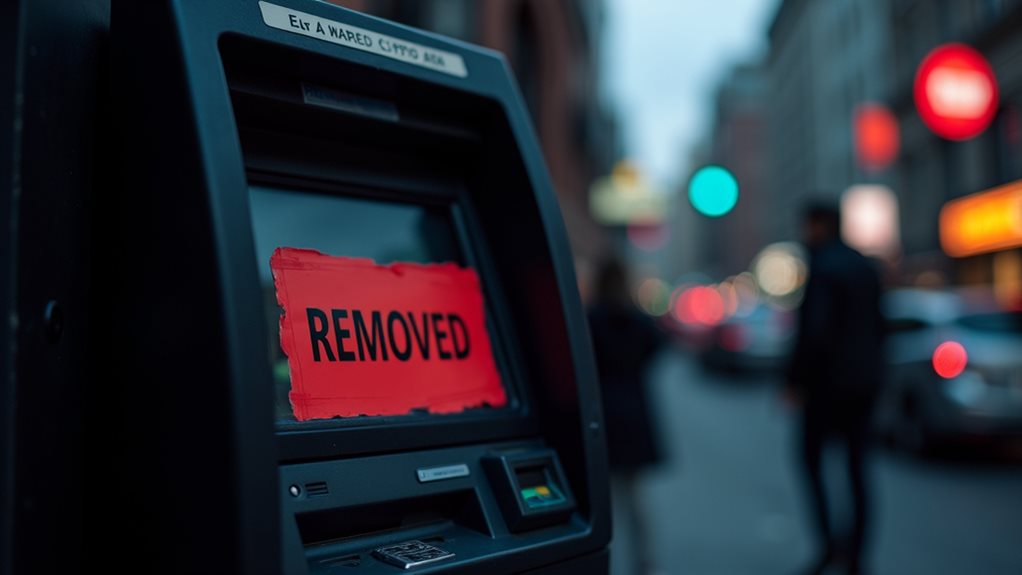
New Zealand is pulling the plug on crypto ATMs, and it’s not messing around. The Ministry of Justice plans to ban these machines entirely as part of a massive overhaul of anti-money laundering laws. Apparently, having 221 crypto ATMs scattered across the country – making New Zealand the 8th largest operator globally – wasn’t exactly the flex authorities were going for.
New Zealand’s 221 crypto ATMs made it the world’s 8th largest operator – definitely not the ranking authorities wanted to celebrate.
The government sees these machines as money laundering gold mines. Criminals love them because they offer anonymity that traditional banks simply don’t provide. Drug dealers, fraudsters, and other unsavory characters can convert dirty cash into digital assets without anyone asking awkward questions. It’s like having a financial invisibility cloak, except law enforcement finally noticed.
Major operators like Localcoin and CoinFlip have built networks that facilitate quick cash-to-crypto exchanges. These machines are everywhere, making it stupidly easy for criminals to move funds into the digital economy and then send them across borders. The government wants to slam that door shut, hard.
The ban isn’t happening in isolation. New Zealand is following international trends, with Germany, Australia, and several US states cracking down on crypto ATMs. Germany seized $28 million from illegal operations in 2024 alone. Clearly, this isn’t just a New Zealand problem.
Two bills supporting these reforms should become law by the end of 2025. The legislation will give the Financial Intelligence Unit expanded powers to monitor suspicious activity across banks and financial services. They’re also implementing a $5,000 limit on international cash transfers because apparently some people think subtlety is overrated. The reforms will also establish a financial sanctions supervisory regime to strengthen oversight.
The government claims it’s trying to balance crime prevention with avoiding excessive burdens on legitimate businesses. They want to make life harder for criminals while keeping regular folks happy. Whether that actually works remains to be seen.
This crackdown targets serious financial crime and terrorism financing. The 221 crypto ATMs currently operating across New Zealand represent a vulnerability that authorities are no longer willing to tolerate. The anonymity these machines provide has become their death sentence. Banks will now be required to implement risk-based customer due diligence measures as part of the enhanced compliance framework. When the ban takes effect, criminals will need to find new ways to launder money.