The supposed $74k ‘break-even’ point is a myth. Miners operate on paper-thin margins. The recent halving slashed their subsidy revenue in half. Electricity, 60-80% of their cost, is the killer. A difference of just a few cents per kilowatt-hour determines profit or ruin. Many hardware payback periods now stretch to multiple years, even decades. This brutal math explains the real losses. The full story behind the collapse is even more stark.
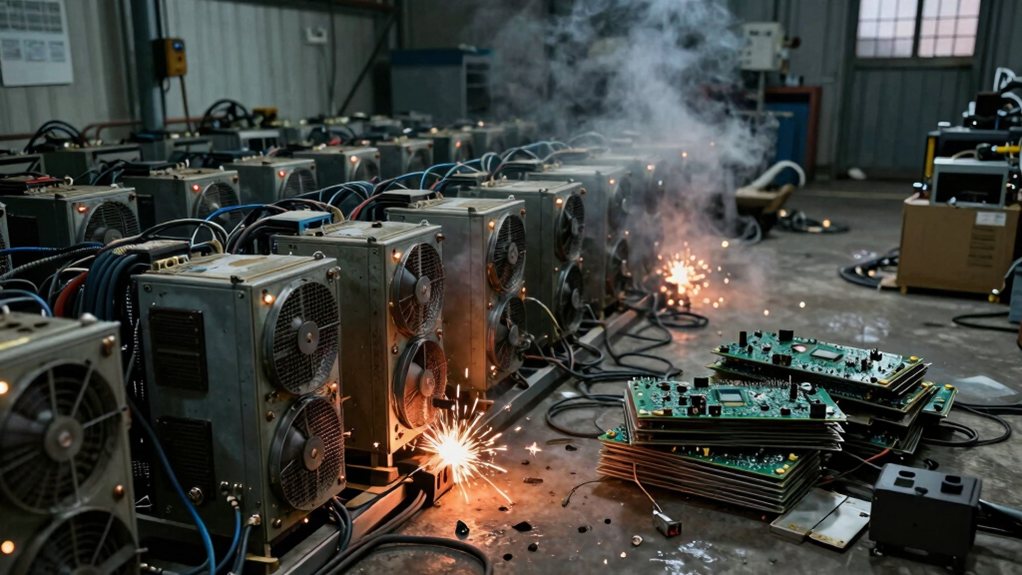
Post-halving, the same computing power earns half from the subsidy alone. Miners collectively mine about $20 million worth of new Bitcoin daily, but margins are paper-thin. Electricity isn’t just a cost; it’s the dominant expense, chewing up 60% to 80% of the total budget. The difference between paying four cents and eight cents per kWh is the difference between profit and shutting down. The network difficulty self-corrects when miners quit, but that’s a painful process. The survivors gain, but everyone sweats.
Look at the hardware. A top-tier ASIC might make $13.50 a day, leading to a payback period of three years or more. That’s the *best* case. A mid-tier machine earns about $6.50 daily, needing over five and a half years to break even. Low-end gear is a joke, taking 30 years. These machines cost thousands. This is a professional game now. GPU mining? Forget it. You’d lose money every day. Current miner specifications show that even high-end models like the Antminer S21 XP Hyd can have an ROI timeline of over three years, while many units have payback periods exceeding 360 months. This is exacerbated by the network difficulty adjustments that occur roughly every two weeks to maintain the 10-minute block time, constantly raising the computational bar.
The return on investment is a nightmare. What was a 12- to 18-month payback before the halving has stretched out for years. Some ASICs have ROI timelines exceeding 360 months. Let that sink in. They’re effectively expensive paperweights. This capital intensity is why public companies and big financed operations dominate. A drop in Bitcoin’s price to $5,000 would only be viable for the most efficient hardware plugged into the cheapest power on Earth. Everyone else is toast.