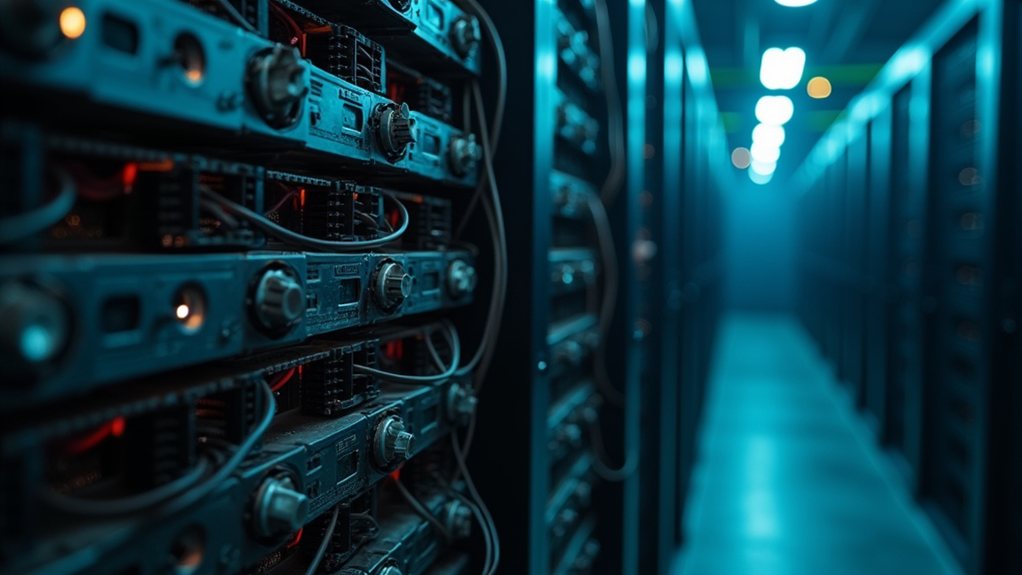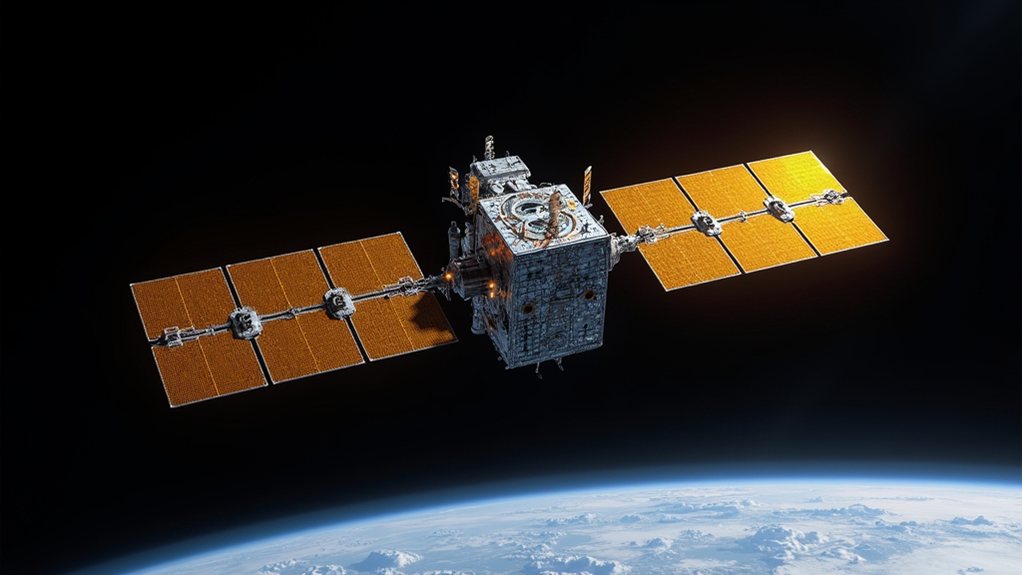
Starcloud, based in Redmond, wants to mine Bitcoin from space. Their first satellite, Starcloud-1, launched in late 2025. It’s fundamentally a fridge-sized orbital data center. Their next satellite, Starcloud-2, will carry actual mining hardware. They claim space offers endless solar power and efficient cooling. The economics are totally unproven, of course. It’s a wild speculative side project. Their bigger ambition involves tens of thousands of satellites. The full story gets even more interesting.
Imagine trying to mine Bitcoin. You need a ton of power and a way to cool the hot, whirring machines. Now imagine doing all that in the vacuum of space. That’s the wild idea from a company called Starcloud, based in Redmond, Washington. They want to put data centers, and Bitcoin miners, into low Earth orbit. Seriously.
Imagine mining Bitcoin, but in the vacuum of space with endless solar power. That’s Starcloud’s wild orbital vision.
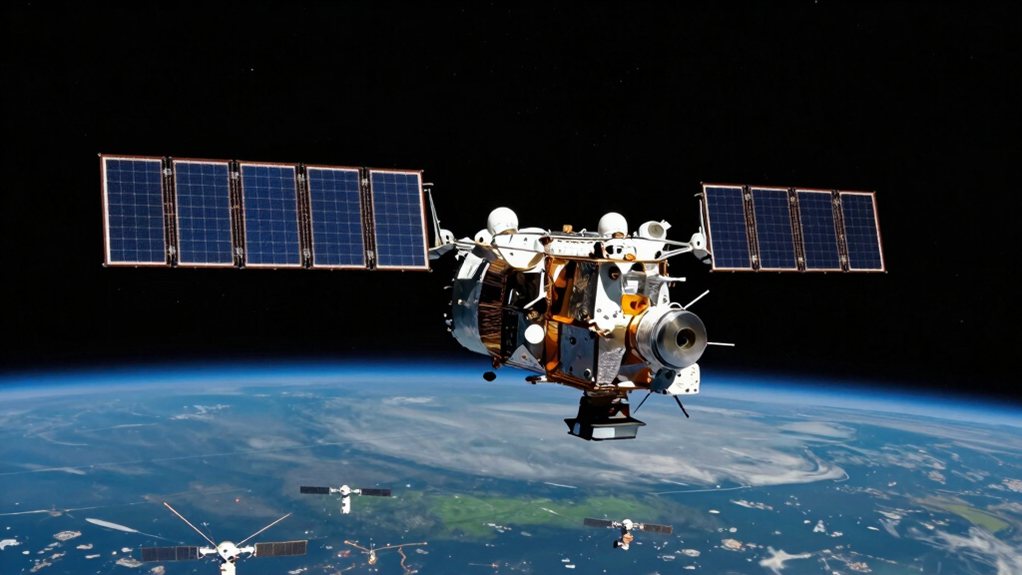
Starcloud launched its first satellite, Starcloud-1, in November 2025. It’s about the size of a refrigerator and carries a powerful NVIDIA H100 GPU. That made it the first GPU-class data center in space. The company even trained an AI model up there. Their tech uses big solar panels for endless power and a clever trick called passive radiative cooling. No giant air conditioners needed. They claim it could be ten times more efficient than earthbound data centers. Bold claim.
Then, in March 2026, they announced a new plan. Mine Bitcoin in space. Their next satellite, Starcloud-2, is scheduled for October and will carry Bitcoin mining ASICs. The CEO, Philip Johnston, confirmed it. They’ll use the constant solar energy up there to run the machines. It’s a speculative side project for now, not their main business. But still, the first Bitcoin mined in space? That’s a headline.
The company has some money to try. They were valued at around $100 million after raising a $21 million seed round. That cash is mostly for building more orbital data centers. They have a partnership with AWS Outposts, which brings in real revenue. The Bitcoin mining is just a future maybe. Because the economics are totally unproven. The company’s primary revenue driver is its AWS Outposts contracts. Sure, sunlight is free, but getting there is not. Their first satellite had a GPU fail before it even launched. Hardware is fragile. An H100 GPU costs over $30,000, while a Bitcoin ASIC might be a few thousand. It’s a risky bet. Its architecture relies on deployable solar panels for continuous energy capture in orbit.
The industry context is crazy, too. Everyone is fighting for cheap power and cool air for AI and Bitcoin mining. Starcloud’s answer is to just avoid Earth entirely. They’ve asked for permission to launch up to 88,000 satellites. They’re not alone. SpaceX, Blue Origin, and China have massive satellite plans of their own. It’s a new space race, for data.