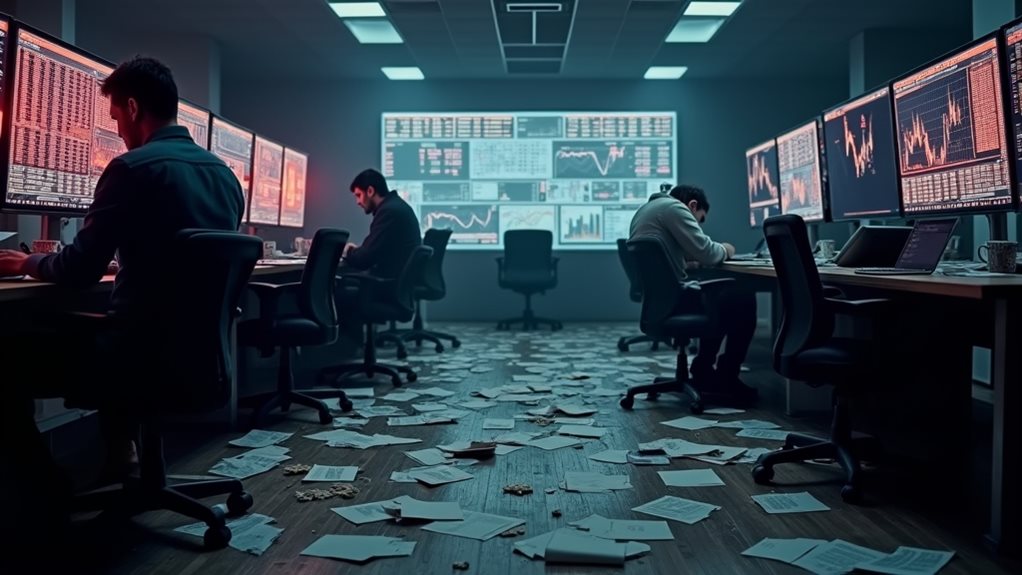

The crypto market has turned into a full-blown disaster zone, with investors watching their portfolios evaporate after multiple platform collapses and regulatory chaos. Trust? Gone. Stability? What's that? While Bitcoin once soared 4,500% during global uncertainty, today's landscape looks more like a digital wasteland. Even die-hard crypto fans are keeping their distance after the TerraUSD and FTX implosions. Yet beneath the rubble, blockchain technology quietly soldiers on – perhaps there's more to this story than meets the eye.

While traditional markets have their ups and downs, the cryptocurrency landscape resembles a chaotic rollercoaster designed by a sugar-rushed teenager. The past year has been particularly brutal, with the TerraUSD collapse and FTX implosion serving as stark reminders that crypto isn't for the faint of heart. These weren't just minor setbacks – they were full-blown catastrophes that sent shockwaves through the entire digital asset ecosystem.
The regulatory picture isn't helping matters. With the SEC and CFTC playing an awkward game of jurisdictional hot potato, cryptocurrency oversight remains about as clear as mud. Global regulators are scrambling to keep up, but they're basically trying to catch a Ferrari with a bicycle. The result? A mess of conflicting rules that's about as helpful as a chocolate teapot. Currently, 42 different nations have imposed restrictions on crypto exchanges and banking activities. The implementation of EU's MiCA rules has only added to the regulatory confusion across borders.
Yet somehow, amid all this chaos, some investors are still finding opportunities. History shows that cryptocurrencies tend to rally during times of global uncertainty – though calling it a "rally" is like calling a tornado a gentle breeze. The 2020 pandemic proved this point when crypto prices shot through the roof while traditional markets wobbled. During the 2012 Middle East unrest, Bitcoin soared 4,500% as investors sought alternative assets.
The broader impact of these market fluctuations has been devastating for many investors. Memecoins collapsed, tokens tanked, and portfolios evaporated faster than a puddle in the Sahara. The once-mighty crypto ecosystem is now looking more like a crypto eco-whimper.
There's a silver lining, though – blockchain technology itself continues to thrive beyond the crypto circus. Industries from healthcare to supply chain management are finding practical uses for the technology, proving that not everything in the space is about speculative trading and digital cats.
Meanwhile, investor sentiment remains about as stable as a jenga tower in an earthquake. Trust is low, and who can blame them? After watching major platforms collapse and countless scams unfold, even the most ardent crypto enthusiasts are thinking twice before diving in.
The market needs more than just hope – it needs concrete catalysts and stability before any meaningful recovery can take hold.