
El Salvador just shattered a 35-year gold drought, dropping $50 million on nearly 14,000 troy ounces of the shiny stuff. The Central American nation hasn’t touched gold since 1990, but apparently holding $700 million in wildly volatile bitcoin got a bit nerve-wracking. Now they’re sitting on about 58,105 troy ounces worth $207 million total. Classic hedge move – crypto for the thrill, gold for when reality bites. There’s more brewing behind this strategic pivot.
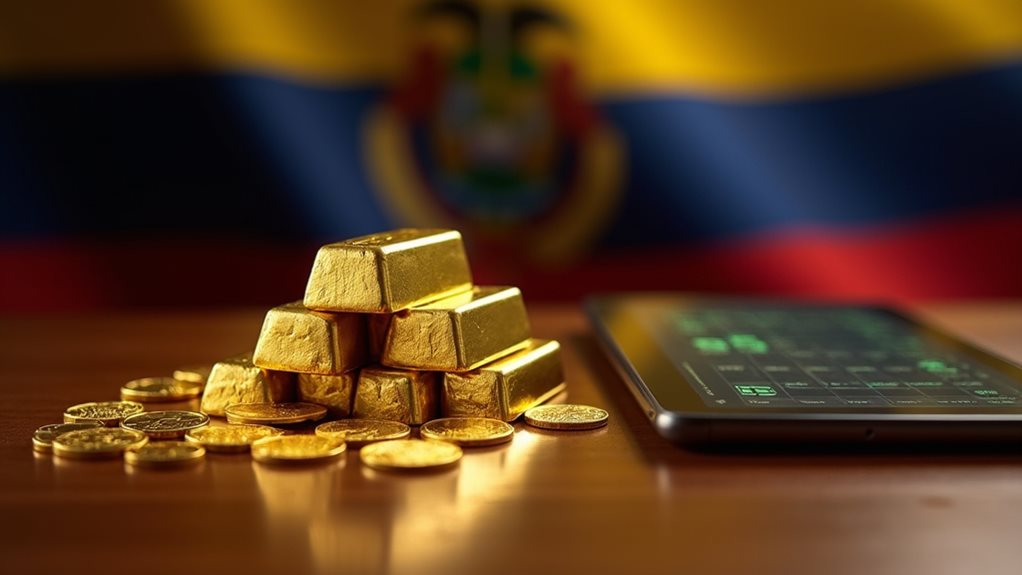
After 35 years of sitting on the sidelines, El Salvador just dropped $50 million on gold. The Central American nation purchased 13,999 troy ounces of the shiny metal, marking its first gold acquisition since 1990. That’s a pretty long drought by any measure.
After a 35-year hiatus, El Salvador splurged $50 million on gold—ending the longest precious metals shopping break in recent history.
The move brings El Salvador’s total gold holdings to 58,105 troy ounces, worth roughly $207 million at current prices. Gold was trading around $3,600 per ounce when they made the purchase, up over 36% for the year. Not exactly buying at a discount, but timing the market is tough for anyone.
This isn’t just some random splurge. The Central Reserve Bank of El Salvador orchestrated this as part of a deliberate diversification strategy. See, the country has about $700 million tied up in bitcoin reserves, and apparently someone figured out that putting all your eggs in the crypto basket might be a bit risky. Who could have seen that coming?
El Salvador made headlines in 2021 as the first nation to adopt bitcoin as legal tender. Bold move, sure, but bitcoin’s notorious volatility has its drawbacks when you’re managing a country’s reserves. Gold, for all its old-school reputation, doesn’t swing wildly like digital assets tend to do. The gold purchase is also viewed as a way to reassure international partners who may have concerns about the country’s heavy bitcoin investment.
The timing aligns with global trends. Central banks worldwide have been gobbling up gold, purchasing over 1,000 tonnes annually for the past two years. Major players like China, India, and Turkey have been stacking metal, and now El Salvador joins the club. Gold makes up nearly 20% of global central bank reserves, trailing only the US dollar. The IMF guidance recommended resuming gold purchases after the country faced pressure to halt Bitcoin accumulation.
El Salvador’s total international reserves sit at around $4.7 billion as of July 2025. Their current gold holdings of 1.37 tonnes pale compared to their historical peak of 14.59 tonnes back in 2000.
But President Nayib Bukele claims the country might have the world’s highest gold deposits per square kilometer. If true, they could potentially mine their way to bigger reserves down the road.
The purchase signals a hybrid approach, balancing cutting-edge crypto with traditional safe-haven assets. Sometimes the old ways stick around for good reason.