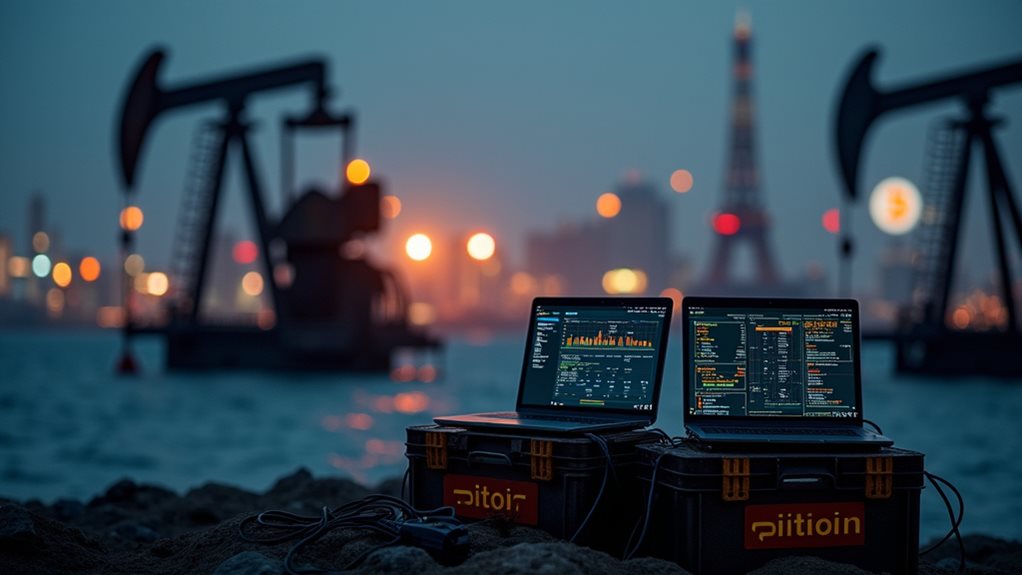

Russian oil giants are thumbing their noses at Western sanctions through crypto. These companies now process millions in Bitcoin and Ethereum transactions monthly with Asian buyers, sidestepping traditional banking systems. The $192 billion annual oil trade continues largely uninterrupted, with payments flowing through digital currencies instead of dollars. It's a clever workaround: forbidden for Russian citizens but perfectly legal for authorized businesses. The crypto solution appears unstoppable, and there's more to this story than meets the eye.

While Western sanctions aim to cripple Russia's oil trade, the petrochemical giant has found an unlikely ally: cryptocurrency. Russia's oil companies, facing unprecedented restrictions from Western nations, are turning to Bitcoin, Ethereum, and stablecoins to keep their massive operations flowing. Who needs SWIFT when you've got crypto?
The numbers tell an interesting story. With annual oil trade valued at $192 billion, Russian companies are now conducting tens of millions in crypto transactions monthly with Asian partners, particularly China and India. It's not exactly chump change, but it's still a fraction of their total trade. The process is surprisingly straightforward: payments received in yuan or rupees get converted to crypto, then to rubles through intermediaries. No dollars needed, thank you very much.
Russian oil trade adapts and survives, converting Asian currencies to crypto and rubles, bypassing Western financial systems entirely.
Russia's government has adapted quickly. While domestic crypto payments remain forbidden (can't have the masses getting too creative), international transactions are now perfectly legal for authorized entities. They've even launched a three-year experimental program for qualified investors to trade cryptocurrencies. Finance Minister Siluanov officially endorsed this shift to crypto-based international payments. The development of a digital ruble by major banks demonstrates their commitment to digital currency adoption. Talk about a convenient change of heart.
The strategy mirrors plays from other sanctioned nations like Iran and Venezuela. But Russia's taking it to another level, developing a digital ruble while simultaneously embracing crypto for international trade. There's just one catch: stablecoin issuers like Tether can freeze assets to comply with sanctions. Oops.
Asian markets have proven particularly receptive to this arrangement. Chinese and Indian oil buyers, already comfortable with alternative payment systems, have embraced the crypto solution. Sure, traditional banks might raise eyebrows, but decentralized systems don't judge – they just execute.
The irony isn't lost on anyone: the same Western-created technology that promised financial freedom is now helping Russia dodge Western sanctions. But it's working. Between cryptocurrencies and alternative payment methods like UAE dirhams, Russia's oil giants are proving remarkably resilient.
The question isn't whether they can survive sanctions anymore – it's whether sanctions can survive crypto.