
Trump’s latest trade tantrum targets countries getting cozy with BRICS, slapping them with hefty tariffs for their “anti-American policies.” Pakistan faces a brutal 30% hit, while the Philippines gets smacked with 18% duties. Serbia’s looking at 35%, and Russia’s staring down 25%. It’s basically economic warfare disguised as trade policy. The EU isn’t taking it lying down either, threatening $95 billion in retaliatory duties. This chess match reveals deeper tensions reshaping global power dynamics.
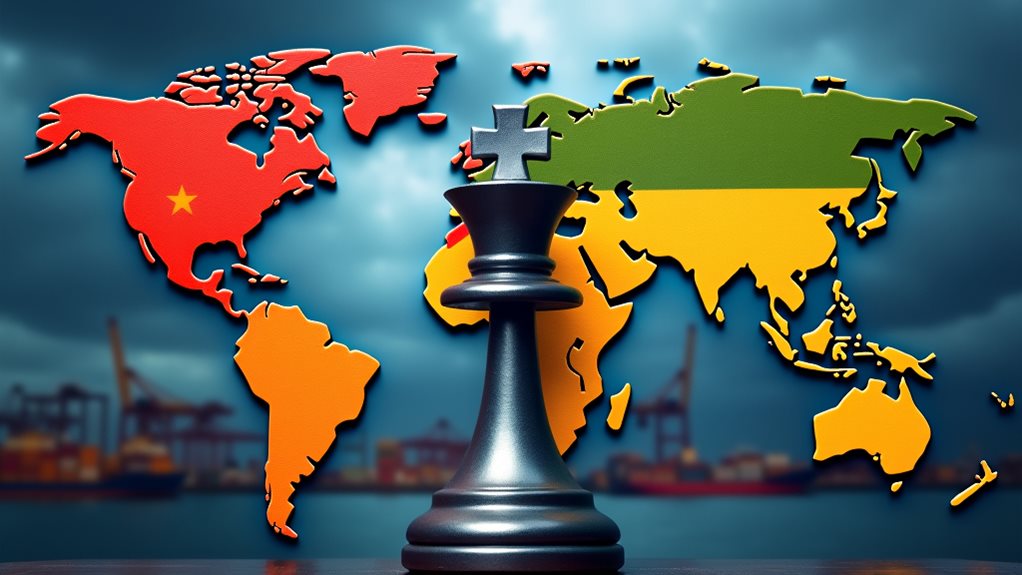
Trump fired another trade war salvo this week, targeting countries that dare to cozy up to BRICS and their “anti-American policies.” The threats are blunt: align with the economic bloc that includes Russia, China, and Iran, and face an additional 10% tariff slap on all your exports to the U.S.
The July 8th announcement wasn’t just empty rhetoric. Real tariffs are already hitting real countries. Pakistan gets slammed with a 30% reciprocal tariff on everything they ship to America, effective August 1st. The Philippines? They’re looking at an 18% hit across all their products, same start date. Both countries caught a brief reprieve when the original July 7th deadline got pushed back, but the hammer still falls.
Serbia faces the harshest punishment of all—a whopping 35% tariff threat hanging over their heads. Russia, meanwhile, stares down a 25% tariff threat, though their imports haven’t felt the bite yet. Lucky them.
The White House isn’t playing games here. This is geopolitical chess with trade policy as the weapon of choice. The goal? Simple. Break up any coalition building against American interests and force countries to pick sides. BRICS expansion? Not on Trump’s watch.
But implementation gets messy, as trade policy always does. Small shipments get de minimis exemptions, with thresholds floating around $150-$200 per item. International postal network goods face their own punishment—90-120% ad valorem duties that’ll make your head spin. Some Russian imports still slip through untouched, creating an odd patchwork of enforcement.
The timing delays reveal the logistical nightmare of modern tariff warfare. You can’t just flip a switch and reorganize global supply chains overnight. Countries need time to scramble, negotiate, or capitulate. The EU is already considering additional import duties on U.S. products worth $95 billion in response to America’s aggressive tariff stance.
International criticism is already pouring in, because nobody likes getting their trade punched in the face. Retaliatory tariffs are almost guaranteed. Supply chain uncertainty will spike. Economic tensions between the U.S. and BRICS nations will escalate further. The multipolar world structure that BRICS advocates for directly challenges America’s global dominance, making this more than just a trade dispute.
The message rings clear: stay neutral, realign with American interests, or pay the price. Third-party nations are taking notes, calculating whether BRICS membership is worth the economic pain Trump’s promising to deliver.